

How Therapeutic Ultrasound Accelerates Injury Recovery: The Definitive Clinical Guide
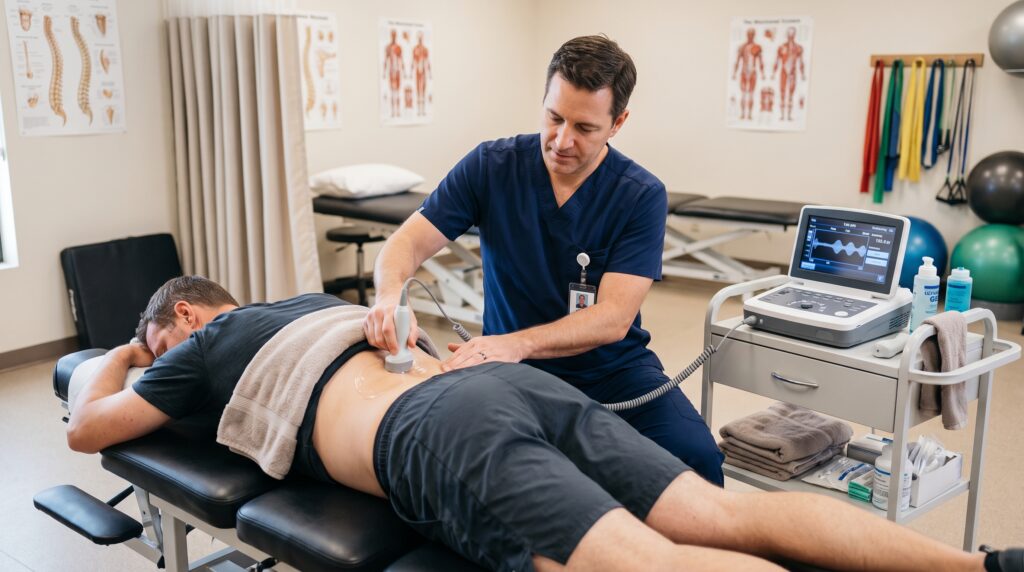 Recovering from an acute injury, motor vehicle collision, or persistent musculoskeletal condition can be debilitating. Whether dealing with cervical whiplash after a car crash, chronic lower back stiffness, or recalcitrant tendon pain, tissue healing often stalls due to swelling, dense scar tissue adhesions, and diminished microcirculation.
At the chiropractic offices of Dr. Keren Gomez, serving patients across Miami-Dade, Broward, and Palm Beach counties, restorative care relies on multidisciplinary, evidence-informed modalities. Among the most versatile physical medicine interventions used alongside spinal adjustments is therapeutic ultrasound.
Below is a comprehensive clinical guide detailing how therapeutic ultrasound works, the biological mechanisms driving its clinical efficacy, how it pairs with chiropractic adjustments, and what patients should expect during rehabilitation.
What Is Therapeutic Ultrasound?
Most people encounter ultrasound as a diagnostic imaging technology—such as prenatal sonograms that visualize fetal development or abdominal sonography evaluating organs. Diagnostic ultrasound transmits short acoustic pulses into the body and measures returning echoes to generate grayscale anatomical images.
Therapeutic ultrasound, by contrast, is not designed to produce an image. Instead, it utilizes continuous or pulsed high-frequency acoustic sound waves (typically ranging between 1.0 MHz and 3.3 MHz) to elicit targeted biological and biomechanical changes within soft tissues. Because these acoustic frequencies operate far beyond the upper limits of human hearing (which caps around 20,000 Hz), patients do not hear the sound waves. Instead, mechanical acoustic energy penetrates deep into injured muscles, ligaments, tendons, joint capsules, and fascial layers.
Therapeutic ultrasound is an adjunctive physical modality used to downregulate nociceptive pain signals, enhance local perfusion, accelerate cellular repair, and remodel dense fibrotic scar tissue.
How Does Therapeutic Ultrasound Work? Primary Mechanisms of Action
Therapeutic ultrasound exerts its physiological effects through two distinct, scientifically validated mechanisms: thermal (continuous mode) and non-thermal/mechanical (pulsed mode).
                    ┌─────────────────────────────────────────┐
                    │      High-Frequency Acoustic Waves      │
                    │         (1.0 MHz to 3.3 MHz)            │
                    └────────────────────┬────────────────────┘
                                         │
                 ┌───────────────────────┴───────────────────────┐
                 ▼                                               ▼
     ┌───────────────────────┐                       ┌───────────────────────┐
     │ Thermal (Continuous)  │                       │  Mechanical (Pulsed)  │
     ├───────────────────────┤                       ├───────────────────────┤
     │ • Deep tissue heating │                       │ • Acoustic streaming  │
     │ • Vasodilation & flow │                       │ • Stable cavitation   │
     │ • Collagen relaxation │                       │ • Fibroblast activity │
     │ • Muscle spasm relief │                       │ • Edema resolution   │
     └───────────────────────┘                       └───────────────────────┘
1. Thermal Effects (Continuous Wave Ultrasound)
When sound waves travel through dense biological structures, friction occurs between the sound beam and cellular molecules. This friction transforms mechanical sound energy into deep, localized kinetic heat.
-
Targeted Deep Heating: Superficial heat modalities (such as moist hot packs or heating pads) struggle to penetrate past superficial skin layers and subcutaneous fat. In contrast, therapeutic ultrasound can heat tissues up to 3 to 5 centimeters below the dermis without overheating superficial skin.
-
Increased Microvascular Blood Flow: The rise in local tissue temperature stimulates vasodilation, increasing capillary perfusion to deliver oxygen, amino acids, and essential immune factors to depleted tissues.
-
Reduction of Muscle Guarding and Spasms: Deep heat reduces muscle spindle sensitivity, calming acute guarding and severe myofascial trigger points.
-
Collagen Extensibility: Heating dense collagenous tissues increases their elasticity. This facilitates joint mobilization, spinal adjustments, and rehabilitative stretching, reducing risk of re-injury.
2. Non-Thermal & Mechanical Effects (Pulsed Wave Ultrasound)
Non-thermal ultrasound delivers acoustic pulses interrupted by brief intervals of rest, minimizing heat accumulation while maximizing cellular mechanical stimulation:
-
Stable Cavitation: Ultrasound creates microscopic gas bubbles within extracellular fluids. When these bubbles rhythmically expand and compress in harmony with the acoustic sound wave, they gently alter local cell membrane permeability without damaging tissue structure.
-
Acoustic Streaming & Microstreaming: The directional flow of fluid surrounding the vibrating cells and cavitation bubbles shears against adjacent cellular boundaries. This mechanical shear stress stimulates cellular metabolism.
-
Accelerated Fibroblastic Synthesis: Mechanical agitation activates fibroblasts to synthesize protein and type I/III collagen, accelerates protein synthesis, and mobilizes localized edema, helping resolve acute inflammation.
Technical Specifications: Frequencies, Duty Cycles, and Depths
To deliver safe, individualized care, clinicians match ultrasound settings directly to tissue depth and chronicity of injury.
| Parameter | Setting / Frequency | Clinical Target | Typical Indication |
| Deep Frequency | 1.0 MHz | Deep tissues (3 to 5+ cm) | Gluteal trigger points, piriformis syndrome, lumbar multifidus strains, hamstring tears |
| Superficial Frequency | 3.0 – 3.3 MHz | Superficial tissues (1 to 2.5 cm) | Lateral epicondylitis (tennis elbow), patellar tendinopathy, wrist sprains, Achilles tendon |
| Continuous Mode | 100% Duty Cycle | Deep heat generation & tissue flexibility | Chronic joint contractures, long-standing scar tissue, persistent myofascial spasms |
| Pulsed Mode | 20% – 50% Duty Cycle | Non-thermal cellular healing without heating | Acute post-collision whiplash, acute ligament sprains, post-traumatic contusions |
Injuries and Conditions Treated with Therapeutic Ultrasound
Therapeutic ultrasound addresses a wide spectrum of acute traumatic injuries and cumulative repetitive strain conditions, including:
-
Auto Accident & Whiplash Injuries: Sudden deceleration forces during car crashes hyperextend and hyperflex the cervical spine, tearing paraspinal ligaments and deep cervical muscles. Pulsed ultrasound calms acute post-traumatic swelling before transitioning into thermal treatment to loosen fibrotic neck stiffness.
-
Slip, Trip, and Fall Trauma: Impact injuries to the sacrum, hip, shoulder, or extremities frequently result in severe contusions, hematomas, and periarticular sprains that respond well to mechanical acoustic drainage.
-
Tendonopathies & Overuse Conditions:
-
Rotator cuff tendinitis and subacromial bursitis
-
Lateral and medial epicondylitis (tennis and golfer’s elbow)
-
Patellar tendinitis (jumper’s knee)
-
Achilles tendinopathy and plantar fasciitis
-
-
Myofascial Trigger Points & Fibrositis: Hyperirritable nodules embedded in taut bands of skeletal muscle fibers—frequently found across the upper trapezius, rhomboids, and lumbar erector spinae.
-
Joint Sprains & Ligamentous Tears: Ankle sprains (anterior talofibular ligament), sacroiliac joint sprains, and collateral knee sprains.
-
Post-Surgical & Post-Injury Scar Tissue: Helps prevent and break down dense collagen adhesions that limit joint range of motion.
The Synergy: Integrating Ultrasound with Chiropractic Adjustments
Therapeutic ultrasound is exceptionally valuable when integrated directly into an overarching, personalized chiropractic treatment regimen.
┌────────────────────────────────────────────────────────┐
│ Phase 1: Therapeutic Ultrasound Application           │
│ Softens taut bands, raises blood flow, desensitizes   │
└──────────────────────────┬─────────────────────────────┘
                           │
                           ▼
┌────────────────────────────────────────────────────────┐
│ Phase 2: Precise Spinal & Extremity Adjustments        │
│ Restores subluxations with reduced resistance/discomfort│
└──────────────────────────┬─────────────────────────────┘
                           │
                           ▼
┌────────────────────────────────────────────────────────┐
│ Phase 3: Active Rehabilitation & Therapeutic Exercise │
│ Consolidates pain-free range of motion & stability    │
└────────────────────────────────────────────────────────┘
-
Preparing Musculature for Adjustments: High muscle tension, voluntary splinting, and acute myofascial spasms resist gentle spinal manipulation. Applying therapeutic ultrasound prior to an adjustment warms collagenous joint capsules and softens tight musculature, making subsequent manual or instrument-assisted adjustments smoother and more comfortable.
-
Prolonging Adjustment Retention: When periarticular connective tissues around the spine are pliable and free from localized adhesions, adjusted vertebrae remain aligned longer, preventing immediate tension-induced subluxation relapse.
-
Optimizing Multimodal Rehabilitation: Ultrasound fits seamlessly alongside electrical muscle stimulation (interferential current), spinal decompression/traction, cryotherapy, and targeted rehabilitative exercise to address both structural spinal alignment and soft-tissue integrity simultaneously.
What Patients Experience During an Ultrasound Treatment
Many patients feel apprehensive before unfamiliar clinical modalities. Understanding the practical procedure clarifies why therapeutic ultrasound is one of the gentlest physical medicine interventions available.
-
Patient Positioning and Skin Preparation: The clinician positions the patient comfortably on a treatment table to access the target anatomical region.
-
Coupling Medium Application: Sound waves cannot travel efficiently through air because air reflects acoustic energy. A hypoallergenic, water-soluble conductive ultrasound gel is applied liberally to the treatment head (soundhead) and the patient’s skin to ensure seamless acoustic transmission.
-
Continuous Transducer Movement: The practitioner glides the soundhead in deliberate, overlapping circular or longitudinal strokes across the treatment zone. Keeping the applicator moving avoids standing acoustic waves (“hot spots”) and ensures uniform energy distribution across the tissue.
-
Sensation:
-
In pulsed mode, patients typically feel only the smooth gliding of the gel-coated applicator against their skin.
-
In continuous mode, patients experience a mild, soothing warmth radiating through deep tissue. Treatment should never feel hot or uncomfortable.
-
-
Treatment Duration: A session generally lasts between 5 and 10 minutes per target anatomical area, depending on surface area and target depth. A typical rehabilitation cycle involves 2 to 3 sessions per week over 3 to 6 weeks, paired with chiropractic adjustments and functional reconditioning exercises.
Clinical Safety, Contraindications, and Best Practices
While therapeutic ultrasound is non-invasive and safe when applied by trained professionals, certain physiological contraindications must be strictly observed.
Absolute and Relative Contraindications
-
Active Malignancies: Ultrasound should not be directed over or near cancerous tumors, as acoustic stimulation may encourage cellular proliferation and angiogenesis.
-
Pregnancy: Never apply ultrasound directly over the lower abdomen, lumbar spine, or pelvis of an expectant mother.
-
Implanted Electrical Devices: Transducers should never be used over pacemakers, implantable cardioverter-defibrillators (ICDs), or deep brain stimulators.
-
Ischemic Tissues or Deep Vein Thrombosis (DVT): Acoustic waves can dislodge vascular emboli or cause complications in areas lacking arterial perfusion.
-
Active Hemorrhage or Uncontrolled Bleeding: Deep heat may amplify active vascular bleeding.
-
Directly Over Metallic/Plastic Joint Implants: High-intensity acoustic energy can produce uneven heating near methylmethacrylate bone cement or plastic prosthetic components (though modern titanium hardware is generally considered safe under controlled parameters).
-
Directly Over the Spinal Cord Post-Laminectomy: Sound waves can penetrate unshielded neural tissue if bone has been removed.
Frequently Asked Questions
Is therapeutic ultrasound painful?
No. Therapeutic ultrasound is painless and non-invasive. Most patients describe it as a relaxing, gentle deep-tissue sensation. If you ever perceive an uncomfortable pinch or intense heat, notify your clinician immediately so they can adjust the intensity or increase soundhead travel speed.
How quickly will I notice improvement?
Many patients experience acute pain relief and improved joint mobility after 1 to 3 sessions. However, long-term cellular remodeling, collagen realignments, and sustained functional recovery generally occur over an individualized treatment plan of 4 to 8 weeks.
Can therapeutic ultrasound deliver anti-inflammatory medications?
Yes. When paired with topical anti-inflammatory formulations (such as hydrocortisone or NSAID gels) instead of standard acoustic gel, the treatment is known as phonophoresis. The sound waves increase skin and transdermal membrane permeability, driving medication deep into local tissues without the need for systemic oral medication or injections.
Why not simply use a heating pad at home?
A standard heating pad produces superficial conductive heat that affects only the epidermis and outer millimeters of tissue; it cannot reach deep paraspinal ligaments, spinal discs, or deep muscle bellies. Furthermore, heating pads cannot generate the non-thermal mechanical shear, acoustic streaming, and cavitation required for cellular repair.
Take the Next Step Toward Recovery
Spinal injuries, sports trauma, whiplash, and chronic joint stiffness require early, targeted care to avoid permanent scar tissue formation and lingering dysfunction.
Dr. Keren Gomez and our clinical team combine advanced therapeutic ultrasound with gentle chiropractic adjustments, therapeutic exercises, and personalized physical modalities to help you achieve a full, lasting recovery.
-
Miami-Dade County: (305) 761-6528
-
Broward County: (954) 510-5518
-
Palm Beach County: (561) 293-3697
-
Email: info@drkerengomez.com